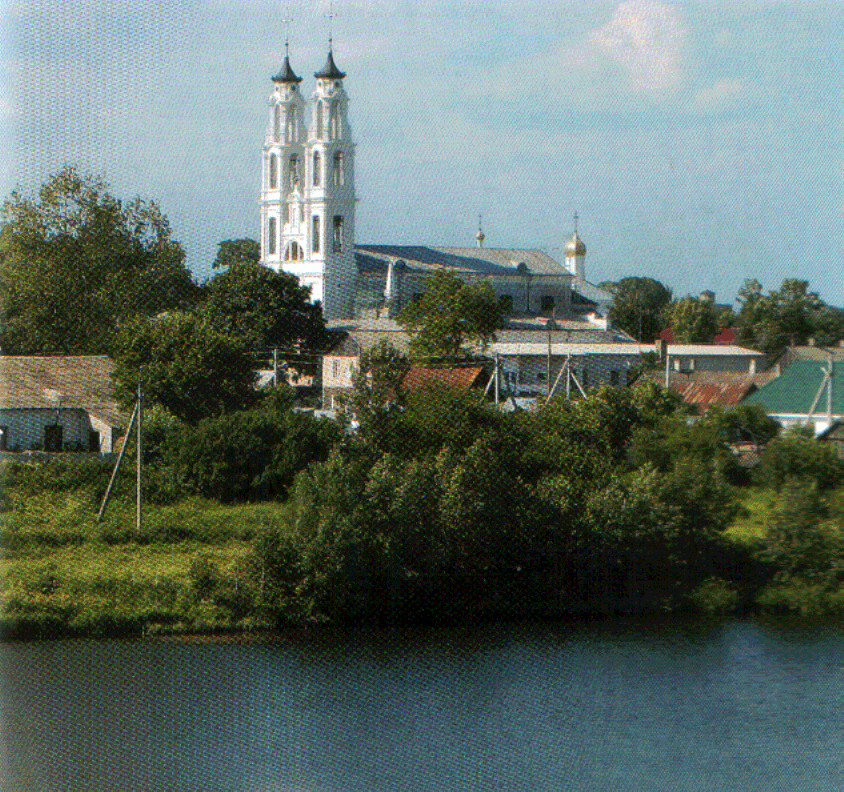
 In 1340 the small town Oshmyany turned from a settlement in the Vilno Principality to a fortress of the Great Dukes of Lithuania. The residency first belonged to Gedimin, and in time passed on as inheritance to his sons Yavnut and then Olgerd. From 1382 Oshmyany became the personal domain of Duke Yagailo. The town weathered two offences from the Crusaders, in 1384 – 1385 and in 1402. Oshmyany remained as one of the residencies of the Great Dukes of Lithuania until the middle of the 15th century. On the night of
 Wednesday, November 22, 2006
Oshmyany
In 1340 the small town Oshmyany turned from a settlement in the Vilno Principality to a fortress of the Great Dukes of Lithuania. The residency first belonged to Gedimin, and in time passed on as inheritance to his sons Yavnut and then Olgerd. From 1382 Oshmyany became the personal domain of Duke Yagailo. The town weathered two offences from the Crusaders, in 1384 – 1385 and in 1402. Oshmyany remained as one of the residencies of the Great Dukes of Lithuania until the middle of the 15th century. On the night of 
Monday, November 20, 2006
Krevo Castle
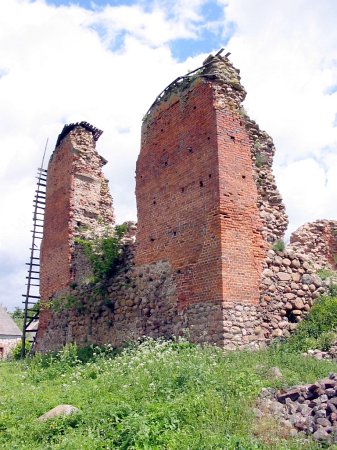 The castle was built in the 14th century as a residence of the Duke and as a fortress. It was a part of chain fortresses that formed the defensive line against the Crusaders. In Lida,
 Wednesday, November 15, 2006
Golshany
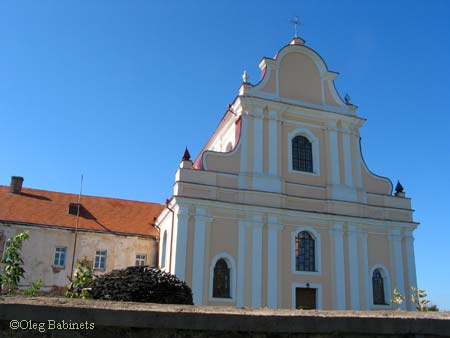 Golshany is the first mentioned in chronicles of the 13th century. It is considered that the founder of the settlement and of the famous royal family of Golshanskys was the legendary Duke Golsha. For quite a long time Dukes Golshanskys held high posts in the Great Lithuanian Principality and later in the Rzecz Pospolita. Duke Algimut is the first representative of this family certifiably recorded by history. He was part of the council sent by Duke Yagailo in 1385 to ask for the hand of the Polish Queen Yadviga. Algimut’s son Ivan was the closest associate of Duke Vitovt who was married to Ivan’s sister – Ulyana Golshanskaya. Ulyana was included in the pantheon of Belarussian saints, along with the most famous female saints of the country – Euphrosinya Polotskaya and Sofia Slutskaya. Relics of the St.Ulyana are in the Kievo-Pecherskaya Lavra (a monastery in
 St.Francis’ monastery is a residential building constructed in the 17th century and attached to the north-west side of the church. The building has two storeys and a gallery. The first floor accommodated a dining hall, the second – the dormitory cells of monks and a libray stocked with around 1000 rare theological texts.
Ivye
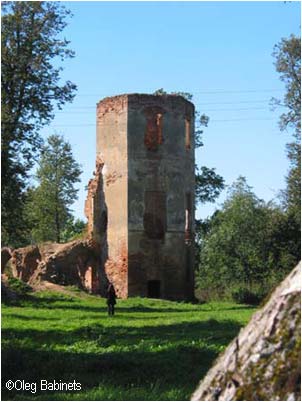
 Pass through the main square and turn right – you will see an imposing Catholic church, one of the very few surviving here. This town was first mentioned in chronicles of the 15th century as the residence on the Great Duke. In 1444 Ivye was given to a Novogrudok head of the local community, Petr Montigerdovich, who commenced construction of the first Catholic church here around 1495. In the second half of the 16th century, Ivye established itself as a center for Protestantism in the Great Lithuanian Principality. Printing houses and school were founded. The rector of the school between 1585 and 1593 was a progressive thinker, educational specialist and poet, yan Namyslovsky. During the next three centuries, ownership of the town often changed hands. Among the prominent families who at one time controlled the area were the Slushkas, Glebovichs, Oginskys, Sapegas. Tyzengauzs and Zamoiskys.
Tatars settled in Ivye around the 16th century, separately from the Christians, in area called Muravsgchizna. In 1884 the owner of the township, Elvira Zamoiskaya, made a donation for the building of a mosque. In 1922, emigrant Tatars donated money and a minaret was added. Local Tatars are followers of the Sunni
Tuesday, November 14, 2006
Grodno and the outskirts
 There are 14 towns, 17 townships, and around 4,500 villages. The main towns are Grodno, Lida, Slonim, Novogrudok and Volkovysk.
Grodno oblast is situated in the north-west of Belarus, by the basin of the River Neman. The region borders with Vitebsk, Minsk and Brest oblast of Belarus as well as with Lithuania and Poland. In the center of the oblast are the Neman lowlands: a plain landscape dotted with Grodno, Volkovysk, Novogrudok, Slonim and Oshmyany hills. The highest point in the locality is Zamkovaya Hill in Novogrudok, 323 metres above sea level. Local climate is mild and humid, the average winter temperature starts -5 degree Celsius, rising to 18 degrees in the summer, however, temperature can reach as high as 30 Celsius, dropping to a massive winter low of -25 Celsius on ocassion.
Rainfall figures:530 mm to 660 mm a year.
Grodno oblast occupies a territory of 25,100 square kilometres.
Its population, as it stood on January 1, 2004, is around 1,146,000. Belarussians make up more than 62% of the region's population, with Poles being the largest minority. Other nationalities living in the Grodno oblast are Russians, Ukranians, Lithuanians, tatars, Jews and more.
The official language are Belarussian and Russian.
A LAND OF RIVERS AND LAKES
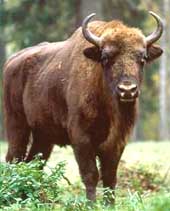
 The locality is rich in lakes, small but scenic. The biggest of them are Lakes Beloye, Rubnitsya, Svir, Vishnevskoye and Svityaz. Most of them are used as water reserves and have grown famous for their clear water. Leafy groves, coniferous and mixed woods cover around one third of the area. Amazengly, parts of ancient virgin forests have survived on the territory. The biggest and most famous of these is Belovezhskaya Pushcha, listed as Biosphere Reserve by UNESCO.
The northern part lies inside the Grodno region. A number of biological reserves have been created especially to protect the great variety plants and trees in the forest: currently there are 1,500 types of vegetation.
TRAVELLING IN THE GRODNO REGION
The Prineman area grants a traveller a wide choice of interesting routes. For boat-enthusiasts, there is a famous Avgustovski canal. It runs inside the Grodno Oblast for 21.2 km and includes four sluices; part of the canal also passes through Poland. Once a year at the end of August, near the Dombrovka sluice, a tri-nation Culture Festival takes place. Art groups and craftsmen from Belarus, Poland and Lithuania take part in the activity.
 Rout Grodno-Slonim-Zhirovichi is full of amazing discoveries. In Slonim, splendid Baroque Catholic churches, as well as M.K.Oginsky's manor and local museum, all well worth a traveller's attention. Zhirovichi is a center for pilgrimage not only for Orthodox Belarussians but also for many believers from afar. Its ocal monastery is well-known for encompassing an ensemble of ancient churches and for its miracle-working, healing icon of the Blessed Virgin. Should the traveller stray from the set path, and come upon the small village Synkovichi, he would not regret it. A church-fortress has stood there, its faceted towers pointing to the sky, for the last 500 years. Its sister fortress and church, Malomozheikovo (also known as 'Muranovka') can be seen during as you drive along the Grodno-Minsk motorway. The road passes through plenty attractive sites: ancient towns and townships of Skidel, Schuchin and Lida, the ancestral nests of gentry's families, old parks, and Catholic and Orthodox churches.
If you come to visit Grodno area, you can not bypass the capital. Thes pearl in the crown of Belarussian cities will surely charm with its cosy atmosphere of ancient narow streets and green courtyyards. Royal castles, imposing Catholic churches, a unique Kalozhskaya church, museums, the only zoo in Belarus, exhibition and concert halls, theatres - Grodno has them all. You can easly spend a couple of days here and every one of those will be packed full with discoveries and impressions.
For nature lovers the Grodno region has a store of treasures - sanatoriums, recreation areas, beaches, rivers and lakes full of fish, and forests full of berries and mushrooms.
In the nest few days I will put some imortant information about the main beautiful places in Grodno Region...